
How to Choose a Hormone Therapy Provider in Richmond: 10 Essential Questions
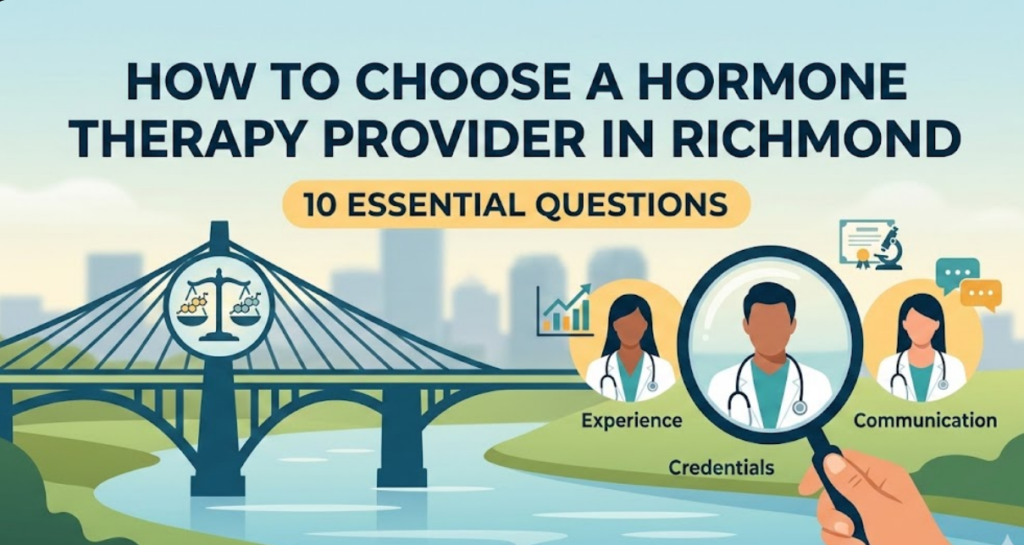
Choosing the right hormone therapy provider significantly impacts your treatment success and safety. Not all providers offer the same expertise, monitoring protocols, or patient care approach. These 10 essential questions help Richmond residents evaluate potential providers and make informed decisions about who will guide their hormone optimization journey.
Bioidentical vs. Synthetic Hormones: Richmond’s Evidence-Based Guide to Choosing the Right HRT Approach

When your provider recommends hormone replacement therapy, you face an important decision: bioidentical or synthetic hormones? The marketing claims can be confusing, with some sources promoting bioidentical hormones as miraculous while others dismiss them as unproven. Richmond women and men deserve evidence-based information—not marketing hype or outdated dismissals—to make informed decisions about their hormone therapy.
Testosterone Therapy for Men Over 50: Richmond’s Guide to Types, Costs, and What Results to Expect

If you’re a man over 50 in Richmond experiencing fatigue, declining strength, weight gain, or reduced vitality, low testosterone might be the culprit. But navigating testosterone replacement therapy can feel overwhelming—What type should you choose? How much will it cost? What results can you realistically expect? This comprehensive guide answers all your questions about TRT specifically for men in their 50s, 60s, and beyond.
Chronic Fatigue, Weight Gain, and Sleep Issues in Your 40s: How Richmond Women Are Finding Relief Through Hormone Balancing

You’re doing everything “right”—eating well, trying to exercise, getting to bed at a reasonable hour—yet you’re exhausted, gaining weight around your middle despite your best efforts, and waking up multiple times each night. If you’re a woman in your 40s, you’re not alone, and more importantly, you’re not imagining it. Many women across Richmond are experiencing these same frustrating symptoms as their hormones begin the perimenopause transition.
What’s the Right Age to Start Hormone Replacement Therapy?
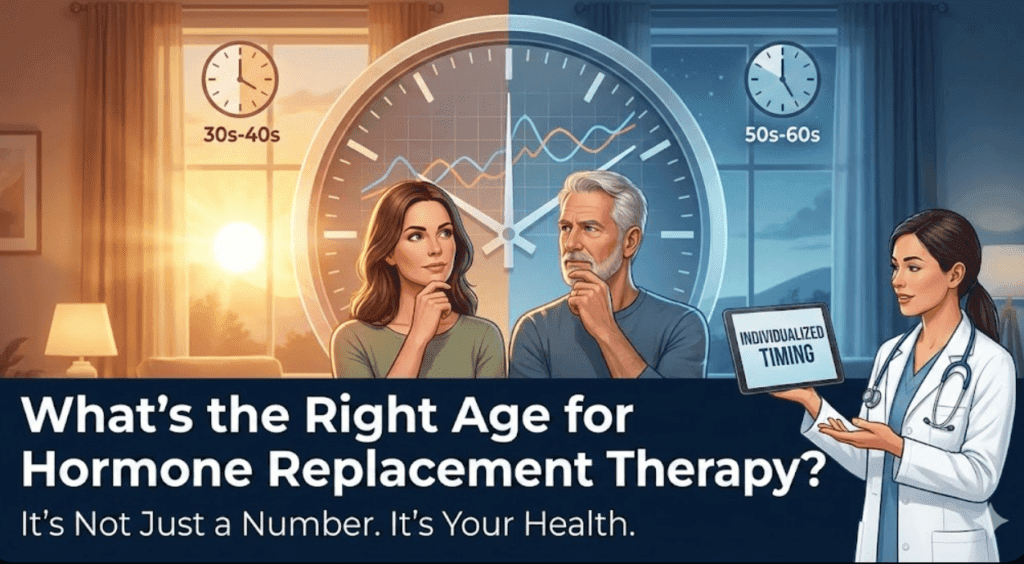
There’s no universal birthday when hormone replacement therapy suddenly becomes appropriate. The right age to start HRT isn’t found on a calendar—it’s written in your symptoms, your hormone levels, and your quality of life. Whether you’re a woman in her 30s experiencing early perimenopause or a man in his 40s struggling with declining testosterone, understanding when to start hormone therapy can be the difference between years of unnecessary suffering and reclaiming your vitality.
Understanding Adrenal Fatigue: Symptoms, Testing, and Natural Recovery Strategies

You’re exhausted despite sleeping. Coffee barely keeps you functional. You feel wired but tired, crashing every afternoon. Your stress response feels broken—small problems trigger overwhelming anxiety. If this sounds familiar, your adrenal glands might be struggling to keep up with the demands of chronic stress, creating a cascade of symptoms that conventional medicine often dismisses but integrative approaches can effectively address.
Thyroid Health and Hormone Balance: Understanding the Connection

Your thyroid isn’t working alone. This small butterfly-shaped gland in your neck orchestrates a complex hormonal symphony that affects everything from your energy and weight to your mood and fertility. When your thyroid falters, the entire system can fall out of tune—and the symptoms often masquerade as other hormone imbalances, leaving you frustrated and searching for answers.
Low Testosterone in Men Under 40: Causes, Symptoms, and Solutions

You’re in your 20s or 30s, supposedly in your prime, but you feel exhausted, struggle to build muscle despite working out, have zero sex drive, and can’t shake the brain fog. Something’s wrong, but you’re too young for “low T,” right? Wrong. Low testosterone in men under 40 is becoming alarmingly common, and recognizing the signs early can be life-changing.
Optimizing Sleep Quality Through Hormone Balance: A Science-Based Approach

Poor sleep isn’t always about willpower or bedtime routines—often, it’s your hormones sending the wrong signals at the wrong times. Understanding the intricate relationship between hormone balance and sleep quality reveals why some nights you sleep deeply while others leave you exhausted despite hours in bed.
Estrogen Therapy vs. Combined Hormone Therapy: Which Do You Need?

Should you take estrogen alone or estrogen with progesterone? This isn’t just an academic question—it’s a decision that significantly impacts your health outcomes. The answer depends primarily on one factor: whether you still have your uterus. Understanding the critical difference between estrogen-only therapy and combined hormone therapy could be the most important thing you learn about menopause treatment.