
Quick Summary
- What it is: Adrenal dysfunction (HPA axis dysregulation) occurs when chronic stress overwhelms your body’s stress response system, causing profound fatigue and numerous other symptoms
- Key symptoms: Unrelenting fatigue, difficulty handling stress, sleep problems, afternoon crashes, brain fog, and feeling “tired but wired”
- Testing: Salivary cortisol testing throughout the day reveals your stress hormone patterns
- Recovery: A comprehensive approach combining stress reduction, sleep optimization, targeted nutrition, and appropriate exercise can lead to meaningful improvement for many people
- Next step: Schedule a comprehensive hormone evaluation at Optimal Health & Wellness (Richmond, VA)
Introduction
You wake up exhausted after eight hours of sleep. By 3 PM, you’re ready to crawl under your desk. You reach for your third cup of coffee, knowing it will barely make a dent in the fog. Small stressors that wouldn’t have fazed you a year ago now feel overwhelming. You’re simultaneously wired and tired—anxious but exhausted, unable to relax but too depleted to be productive.
Your doctor ran standard blood work. Everything looks “normal.” They suggest you’re just stressed, maybe depressed.
But you know something deeper is wrong. Your body’s stress response system has been pushed beyond its capacity for too long. The result is a constellation of symptoms that significantly impacts your quality of life, even though conventional testing might not reveal obvious abnormalities.
This is the experience of adrenal dysfunction, commonly referred to as “adrenal fatigue,” though the medical community debates this terminology. In this article, we’ll use the term “adrenal dysfunction” to describe this pattern of HPA axis dysregulation. Regardless of what we call it, the symptoms are real, the mechanisms are understood, and most importantly, meaningful improvement is possible for many people with the right approach.
Understanding Your Stress Response System
Your two adrenal glands sit atop your kidneys, producing over 50 hormones that regulate body functions, with cortisol as the star player in your stress response.
The HPA Axis: Your Stress Command Center
Your stress response is orchestrated by the hypothalamic-pituitary-adrenal (HPA) axis. When you encounter stress, your hypothalamus signals your pituitary gland, which tells your adrenal glands to produce cortisol. When stress passes, the system should return to baseline.
This system evolved for acute stressors followed by recovery periods. The problem? Modern life creates chronic, unrelenting stress that never allows full recovery.
In healthy amounts, cortisol regulates blood sugar, modulates immune function, affects memory and cognition, helps you wake up in the morning, and allows you to respond appropriately to stressors.
Studies in Psychoneuroendocrinology demonstrate that chronic stress causes measurable changes in HPA axis function—the entire stress response system becomes dysregulated, creating patterns like elevated cortisol throughout the day, flattened cortisol curves, reversed rhythms (low morning, high night), and blunted stress responses.
Recognizing Adrenal Dysfunction: Key Symptoms
Adrenal dysfunction creates wide-ranging impact because cortisol affects virtually every body system.
Primary Symptoms
Profound, unrelenting fatigue: Bone-deep exhaustion that sleep doesn’t resolve. You wake tired, struggle through morning, might get a slight boost after lunch, then crash hard in the afternoon.
The afternoon crash: A hallmark is the 3-4 PM energy crash when cortisol drops too low, creating an overwhelming need to nap or reach for stimulants.
Sleep disturbances: Difficulty falling asleep despite exhaustion, waking during the night (especially 2-4 AM), or feeling wired at night when you should be winding down.
The “tired but wired” paradox: Many experience reversed cortisol rhythm—exhausted during the day but unable to sleep at night, lying awake with racing thoughts.
Difficulty handling stress: Small stressors trigger disproportionate responses. Your stress tolerance has dramatically decreased.
Cognitive symptoms: Brain fog, difficulty concentrating, poor memory, difficulty making decisions, and feeling mentally sluggish.
Physical Symptoms
- Craving salt or sugar/caffeine for energy
- Lightheadedness when standing quickly
- Decreased ability to handle exercise
- Frequent infections or prolonged recovery
- Weight gain, particularly around midsection
- Decreased libido and muscle weakness
What Causes Adrenal Dysfunction?
Adrenal dysfunction develops from the cumulative effect of chronic stressors overwhelming your body’s adaptive capacity.
Major Contributing Factors
Chronic psychological stress: Work pressure, financial stress, relationship difficulties, caregiving responsibilities, perfectionism, lack of downtime—when stress becomes your baseline state, your HPA axis never resets.
Physical stressors: Chronic pain or illness, surgery, chronic inflammation, overtraining without adequate recovery, chronic infections, and sleep deprivation all activate your stress response. Your body doesn’t distinguish between psychological and physical stressors.
Dietary and lifestyle factors: Blood sugar dysregulation, excessive caffeine (artificially stimulates cortisol), regular alcohol use (disrupts cortisol rhythm), inadequate nutrient intake, and irregular eating patterns.
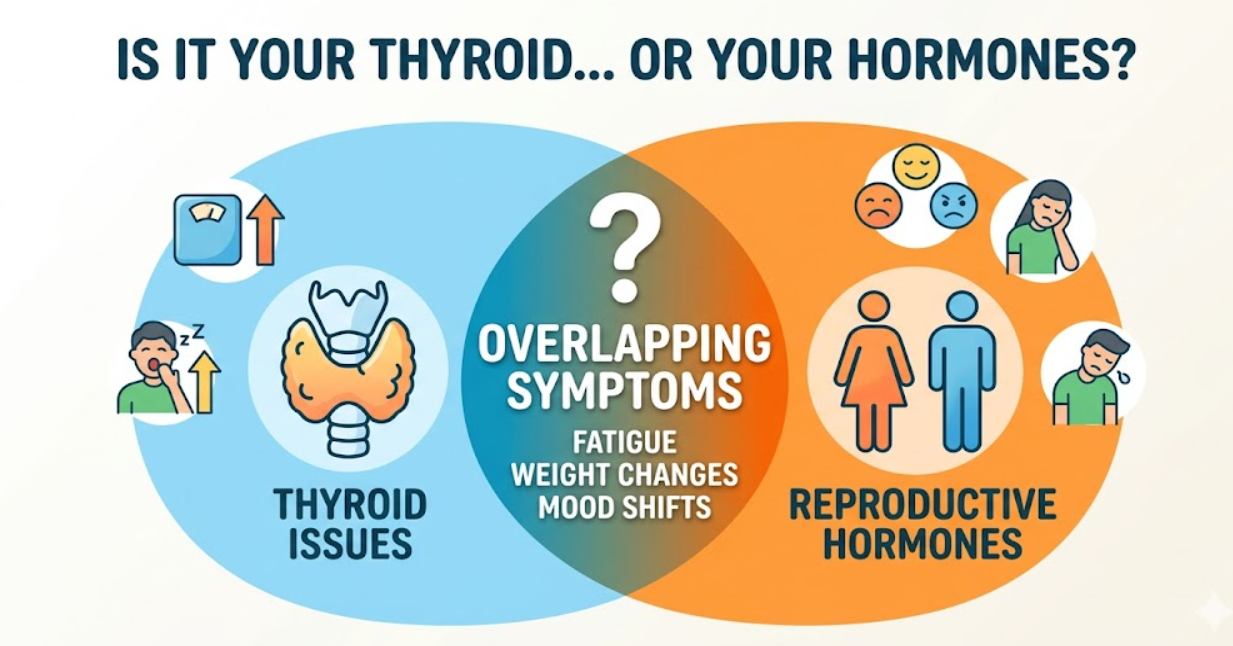
Hormonal factors: Thyroid dysfunction, sex hormone imbalances, perimenopause/menopause transitions, and insulin resistance all interact with and exacerbate adrenal dysfunction.
Here’s the critical insight: it’s not one stressor—it’s the cumulative burden. A demanding job might be manageable alone. Add chronic pain, poor sleep, relationship stress, and blood sugar swings, and suddenly your stress adaptation capacity is exceeded.
Cortisol Testing: Measuring Your Patterns
Unlike standard blood tests that measure a single point in time, optimal assessment requires measuring your cortisol rhythm throughout the day.
Why Standard Blood Tests Miss the Problem
A single morning cortisol blood test might show “normal” levels while completely missing abnormal rhythm. Cortisol should be highest in morning and gradually decline to lowest around midnight. A single measurement can’t detect pattern abnormalities.
Salivary Cortisol Testing
Salivary cortisol testing measures free cortisol at multiple time points (morning, mid-morning, afternoon, evening), creating a cortisol curve showing your rhythm pattern. Research suggests this is a useful, non-invasive method for assessing HPA axis function.
Cortisol Pattern Stages
Stage 1 – High cortisol: Elevated throughout the day, especially evening. You feel wired, anxious, can’t shut off your mind.
Stage 2 – Mixed pattern: Morning cortisol normal or low, afternoon/evening elevated. Classic “tired but wired” presentation.
Stage 3 – Low cortisol: Low throughout the day—the exhaustion phase where your HPA axis can’t mount adequate response.
At Optimal Health & Wellness (Richmond, VA), we provide comprehensive hormone testing including cortisol rhythm assessment, thyroid panels, sex hormones, DHEA, and nutritional markers as part of our integrated approach.
Natural Recovery Strategies
Recovery requires a multi-faceted approach addressing the root causes of HPA axis dysregulation.
1. Stress Reduction: Non-Negotiable Priority
![Meditation practice]
You can’t supplement your way out of chronic stress. Make a realistic assessment of what’s driving stress—what can be eliminated, delegated, or modified?
Build resilience practices: Regular meditation or mindfulness (even 10 minutes daily), deep breathing exercises, time in nature, boundaries around work and obligations.
Nervous system regulation: Yoga, gentle stretching, progressive muscle relaxation, massage, or acupuncture activate your parasympathetic (rest-and-digest) nervous system.
2. Sleep Optimization
![Peaceful sleep environment]
Sleep is when your body repairs and resets the HPA axis. Without adequate sleep, recovery is impossible.
Fundamentals: Consistent sleep-wake times, dark cool environment (60-67°F), no screens 1-2 hours before bed, avoid caffeine after noon, limit alcohol.
For reversed rhythm: Morning bright light exposure, magnesium glycinate before bed, possibly melatonin under practitioner guidance.
3. Nutritional Support
![Nutrient-dense meals]
Dietary principles: Regular balanced meals (never skip breakfast), adequate protein at each meal, healthy fats, complex carbohydrates, limit caffeine (1 cup morning maximum), minimize processed foods and sugar.
Key nutrients: Vitamin C (depleted by stress, needed for cortisol production), B vitamins (especially B5 for adrenal function), magnesium (depleted by stress), vitamin D (modulates stress response), and omega-3 fatty acids (anti-inflammatory).
Important: These suggestions are general educational examples, not prescriptions. Doses should be individualized based on your health history and lab work. Talk with your provider at Optimal Health & Wellness before starting any supplement regimen.
4. Adaptogenic Herbs
![Adaptogenic herbs]
Adaptogens help your body adapt to stress and restore balance. Research shows several herbs modulate HPA axis function:
- Ashwagandha: Reduces cortisol, best for high cortisol patterns
- Rhodiola: Improves energy and cognitive function, best for fatigue
- Holy Basil: Reduces cortisol, supports blood sugar balance
- Eleuthero: Supports energy without overstimulation
Work with a practitioner to select appropriate herbs and doses based on your specific cortisol pattern. This is crucial for safety and effectiveness.
5. Strategic Exercise
![Gentle walking]
During acute dysfunction: Avoid high-intensity exercise (further stresses HPA axis). Focus on gentle movement—walking, swimming, gentle yoga. Keep heart rate moderate.
During recovery: Gradually reintroduce moderate intensity, strength training 2-3x weekly, limit intense cardio to 1-2x weekly. If exercise depletes rather than energizes, pull back.
6. Hormone Support When Needed
![Medical consultation]
Sometimes lifestyle interventions aren’t sufficient. Thyroid optimization, sex hormone balance with bioidentical therapy, or DHEA supplementation under practitioner guidance may be appropriate. In some cases, specialists may consider short-term low-dose hydrocortisone under close supervision for more severe cases.
Recovery Timeline: What to Expect
![Recovery timeline]
Recovery is gradual. Weeks 1-2: Initial adjustment (you might feel slightly worse). Weeks 3-6: First improvements—better sleep, slight energy boost. Months 2-4: Energy stabilizing, afternoon crashes less severe. Months 4-8: Substantial recovery, consistent energy. Months 8-12: Near complete recovery for many people.
Timeline varies based on severity. Compliance is essential. Recovery is gradual with ups and downs. Stress management must continue long-term.
The Bottom Line
![Hope and recovery]
Living with adrenal dysfunction feels overwhelming, especially when conventional medicine dismisses your symptoms. But you’re not crazy—your symptoms are real, and meaningful improvement is possible for many people.
Adrenal dysfunction develops from chronic stress overwhelming your adaptive capacity. Recovery requires addressing root causes while supporting your body’s natural healing. It takes time and commitment, but many people report significant improvement in their energy and stress resilience using similar strategies.
You deserve to feel energized, handle stress appropriately, think clearly, and wake up refreshed.
Get Comprehensive Assessment in Richmond
![Book appointment]
At Optimal Health & Wellness (Richmond, VA), we understand that adrenal health is inseparable from overall hormone balance. Effective treatment requires addressing the complete picture.
Our approach includes: Complete cortisol rhythm testing, comprehensive hormone panel, nutritional assessment, personalized recovery protocol, integrative treatment, and ongoing support.
Contact Us
Optimal Health & Wellness Center
1630 Wilkes Ridge Parkway Suite 105
Henrico, VA 23233
(804) 280-0282
Don’t spend another day exhausted and dismissed. Schedule your adrenal health evaluation today.
About the Author
This article was developed by the hormone optimization specialists at Optimal Health & Wellness (Richmond, VA). Our medical team includes board-certified practitioners with specialized training in endocrinology, functional medicine approaches to HPA axis dysfunction, and integrative treatment strategies.
Medical Disclaimer: This article is for informational purposes only and does not constitute medical advice. Always consult with a qualified healthcare provider before starting any treatment. If you experience severe symptoms, seek immediate medical attention to rule out serious conditions including Addison’s disease.