Key Takeaways
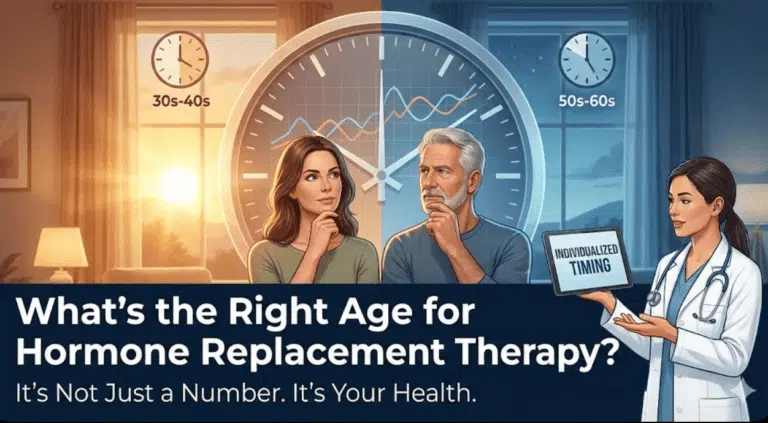
- There’s no single “right age” to start hormone replacement therapy—timing depends on your symptoms, hormone levels, and individual health status, not just your birthday.
- The “critical window” concept suggests starting HRT within 10 years of menopause onset (or before age 60 for women) offers maximum benefits and lowest risks for cardiovascular and cognitive protection.
- Earlier may be better for symptom relief and long-term health protection. Some research suggests that, when hormone therapy is appropriate, starting earlier in the menopausal transition may offer greater benefits for bone density and possibly cardiovascular and cognitive health, compared with starting later.
- You’re not too young if you have symptoms. Women in their 30s with early perimenopause and men in their 30s-40s with declining testosterone can benefit from hormone therapy under proper medical supervision.
- Age 60+ isn’t automatically disqualifying but requires careful individualized assessment weighing risks versus benefits, especially if more than 10 years have passed since menopause.
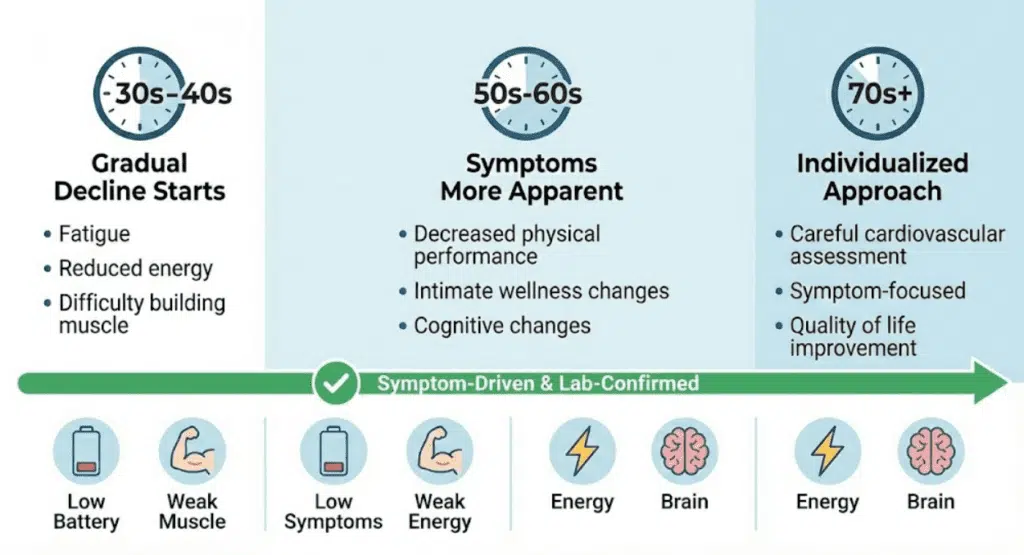
- Men typically start considering TRT when testosterone levels decline (often beginning around age 30-40) and symptoms like fatigue, reduced energy, decreased muscle mass, and cognitive changes affect quality of life.
You’re 38 years old, experiencing irregular periods, crushing fatigue, and mood swings that make you feel like a stranger in your own body. You mention hormone therapy to your provider, and they dismiss you: “You’re too young for that.”
Or perhaps you’re 62, still struggling with hot flashes and sleep disruptions five years after your last period. You ask about hormone replacement therapy, and hear: “You’re too late—you missed the window.”
Both of these scenarios happen every day in medical offices across the country. And both represent a fundamental misunderstanding of how hormone therapy timing actually works.
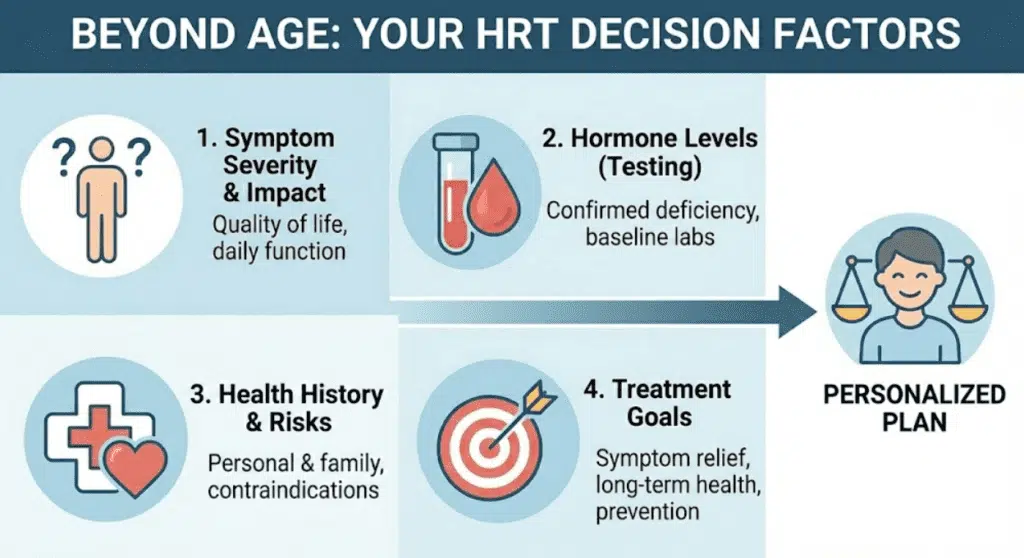
The truth? The “right age” to start hormone replacement therapy isn’t a number—it’s a constellation of factors including your symptoms, your hormone levels, your health history, and your treatment goals. Understanding these factors can help you make the informed decision that’s right for your body, regardless of what your birth certificate says.
Understanding Hormone Decline: Why Age Matters (But Isn’t Everything)
Before we discuss optimal timing, let’s establish what’s actually happening in your body as you age.
For Women: The Perimenopause-to-Menopause Transition
Your ovaries don’t flip a switch one day and stop producing hormones. The decline is gradual, starting in your 30s and accelerating through perimenopause—the transitional phase that can last anywhere from 4 to 10 years before your final menstrual period.
During perimenopause, your hormone levels don’t just drop—they fluctuate wildly. Estrogen might spike one month and plummet the next. Progesterone production becomes erratic. This hormonal chaos creates the symptoms many women dismiss as “just stress” or “getting older”: irregular periods, mood changes, sleep disruptions, brain fog, and hot flashes that can begin years before actual menopause.
Menopause is officially diagnosed when you haven’t had a period for 12 consecutive months. The average age is 51, but this varies significantly. Early menopause (ages 40-45) affects about 5% of women, while premature menopause (before age 40) occurs in approximately 1% of women. Both situations create unique considerations for hormone therapy timing.
For Men: The Gradual Testosterone Decline
Men don’t experience the dramatic hormonal shift that women do, but testosterone levels typically begin declining around age 30 at a rate of approximately 1% per year. This gradual decrease—sometimes called andropause or “male menopause”—is highly variable among individuals.
Some men maintain adequate testosterone well into their 60s and 70s with minimal symptoms. Others experience significant decline in their 30s and 40s, leading to fatigue, decreased muscle mass, weight gain (particularly abdominal fat), changes in intimate wellness, mood changes, and cognitive decline that significantly impacts their quality of life.
The key insight: chronological age doesn’t perfectly predict hormonal age. Your hormone levels and symptoms matter more than the number of candles on your birthday cake.
The Critical Window Hypothesis: Why Timing Matters
One of the most important concepts in hormone therapy is the “critical window” or “window of opportunity” hypothesis, which has significant implications for treatment timing. This concept has been extensively studied and continues to inform clinical practice.
What the Research Shows
Multiple studies, including reanalysis of the Women’s Health Initiative data and subsequent research, demonstrate that hormone therapy’s benefits and risks are significantly influenced by when treatment begins relative to menopause onset. The “critical window” or “timing hypothesis” has emerged as a key concept in understanding optimal HRT timing.
According to research published in the Journal of Clinical Endocrinology & Metabolism, women who start hormone therapy within 10 years of their final menstrual period—or before age 60—experience:
- Reduced cardiovascular disease risk (compared to increased risk when started later)
- Better cognitive protection and potentially reduced dementia risk
- Superior bone density preservation
- More effective symptom relief with lower required doses
- Overall more favorable benefit-to-risk ratio
Starting hormone therapy more than 10 years after menopause or after age 60 doesn’t offer the same cardiovascular and cognitive protective benefits and may actually increase certain risks, particularly for heart disease and stroke.
Why the Window Exists
The critical window concept is based on cardiovascular biology. In the years immediately following menopause, blood vessels are still relatively healthy and responsive to estrogen’s beneficial effects. Estrogen helps maintain vascular flexibility, reduces inflammation, and supports healthy cholesterol metabolism.
However, as years pass without estrogen, blood vessels undergo changes—becoming stiffer, accumulating more plaque, and losing their ability to respond positively to estrogen. Introducing estrogen to already-compromised vessels may trigger destabilizing effects rather than protective ones, as demonstrated in cardiovascular research.
This doesn’t mean hormone therapy is never appropriate after age 60 or more than 10 years post-menopause—but it does mean the decision requires more careful individualized assessment, as recommended by the Endocrine Society, and the primary justification shifts from disease prevention to quality-of-life symptom management.
For Women: Age-by-Age Guide to Hormone Therapy
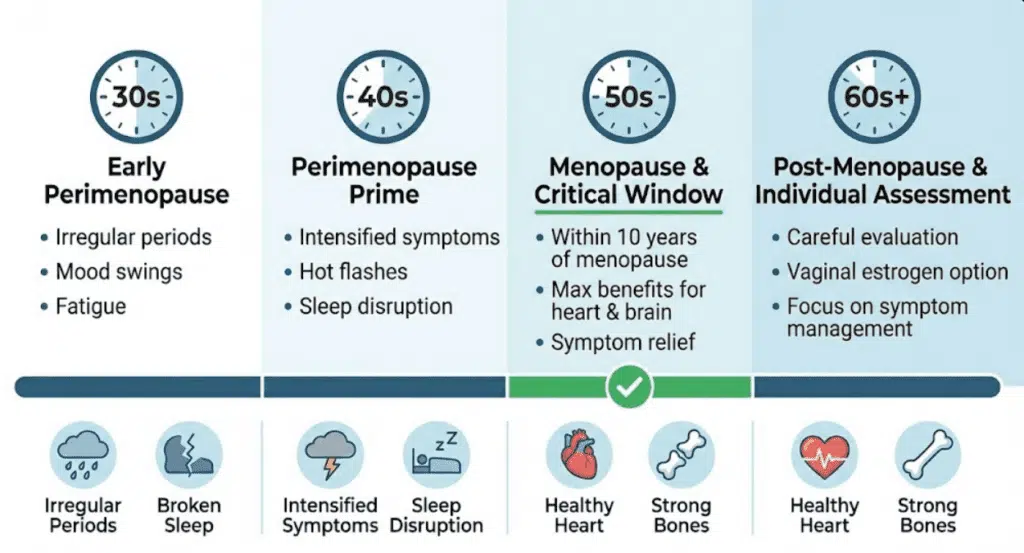
In Your 30s: Early Perimenopause and Premature Menopause
You’re not too young for hormone therapy if you’re experiencing hormonal symptoms. Women in their 30s may be candidates for HRT if they’re experiencing:
Premature ovarian insufficiency (POI): If your ovaries stop functioning before age 40, hormone replacement is usually strongly recommended to protect your bones, heart, and brain from the consequences of premature estrogen loss, unless there’s a specific reason you can’t take it.
Early perimenopause symptoms: Some women begin perimenopausal symptoms in their mid-to-late 30s. If irregular periods, mood changes, sleep disruptions, or other symptoms are impacting your quality of life, bioidentical hormone therapy may be appropriate even at this age.
Surgical menopause: If you’ve had your ovaries removed (oophorectomy) at any age, hormone replacement is typically recommended to prevent the health consequences of sudden estrogen loss.
The younger you are when menopause occurs—whether naturally or surgically—the stronger the medical recommendation for hormone replacement, as you face decades of living without hormones that your body needs for optimal function.
In Your 40s: Perimenopause Prime Time
Your 40s are when most women first seriously consider hormone therapy. This is the decade when perimenopausal symptoms typically intensify, and for many women, actual menopause occurs (especially in the late 40s).
This is often an ideal time to start HRT because:
- Symptoms are significant enough to justify treatment
- You’re well within the critical window for cardiovascular and cognitive benefits
- Your blood vessels are still healthy and responsive to estrogen
- You can establish optimal dosing while symptoms are developing rather than waiting until they’re severe
Don’t let anyone tell you that experiencing symptoms in your 40s is “too early” for treatment. This is precisely when hormone therapy can be most beneficial.
In Your 50s: The Sweet Spot for Starting HRT
The early-to-mid 50s represent the most common age range for beginning hormone therapy. Most women reach menopause in their early 50s, and starting HRT during this decade means you’re well within the critical window.
Research from Duke Health confirms that women under 60 who start HRT within 10 years of their final period experience the best benefit-to-risk ratio, particularly for systemic hormone therapy (pills, patches, or pellets that affect your whole body).
In Your 60s and Beyond: Individual Assessment Required
Reaching age 60 doesn’t automatically disqualify you from hormone therapy, but it does mean you need more careful evaluation. Consider these scenarios:
Recently menopausal (within 10 years): If you’re 60-62 but your final period was only a few years ago, you may still be a good candidate for HRT, especially if you’re otherwise healthy with good cardiovascular markers.
Long past menopause (more than 10 years): If you’re 65 and your menopause occurred at 52, the cardiovascular and cognitive protective benefits are less clear, and risks may outweigh benefits. However, if severe symptoms are significantly impacting your quality of life, HRT may still be considered on a case-by-case basis.
Vaginal estrogen exception: Low-dose vaginal estrogen (creams, tablets, or rings) for vaginal dryness and urinary symptoms can be started at any age without the same risk concerns as systemic hormone therapy.
For Men: When to Consider Testosterone Replacement Therapy
Age and Testosterone Decline
Unlike women’s relatively sudden hormonal shift at menopause, men experience gradual testosterone decline beginning around age 30. However, the rate of decline varies significantly, and symptoms don’t correlate perfectly with age.
According to research on testosterone replacement timing, several factors influence when men might benefit from TRT:
In Your 30s-40s:
Many men are surprised to learn that testosterone levels can drop significantly in their 30s and 40s, particularly in the presence of:
- Obesity (fat tissue converts testosterone to estrogen)
- Chronic stress (elevates cortisol, which suppresses testosterone)
- Poor sleep (testosterone is produced during sleep)
- Sedentary lifestyle
- Chronic health conditions (diabetes, metabolic syndrome)
- Certain medications (especially opioids)
If you’re experiencing low testosterone symptoms in your 30s or 40s—persistent fatigue, difficulty building muscle, weight gain (especially abdominal), reduced intimate function, mood changes, or cognitive issues—you’re not “too young” for evaluation. You may have a treatable hormone deficiency that’s robbing you of your prime years.
In Your 50s-60s:
This is when testosterone deficiency becomes more common and symptoms more apparent. Many men in this age range notice a significant decline in physical performance, intimate wellness, and overall vitality compared to their younger years.
Testosterone replacement therapy at this age may help restore energy, improve body composition, enhance overall wellness, support cognitive health, and significantly improve quality of life in appropriately selected men—but only if you actually have low testosterone confirmed by testing.
In Your 70s and Beyond:
Age alone doesn’t preclude TRT. If you have confirmed low testosterone and bothersome symptoms, treatment can be appropriate with proper medical supervision and monitoring. However, cardiovascular health assessment is particularly important in this age group.
Beyond Age: Other Critical Factors in Timing Decisions
Symptom Severity
Age matters less than symptom impact. If hormonal symptoms are significantly affecting your work performance, relationships, sleep, mental health, or overall quality of life, hormone therapy deserves consideration regardless of whether you’re “the right age” by conventional standards.
Hormone Levels
Testing is essential. Your symptoms should correlate with actual hormone deficiency. For women, this typically means testing FSH, estradiol, and progesterone. For men, total testosterone, free testosterone, and related markers are evaluated.
Health History
Certain conditions affect whether hormone therapy is appropriate:
Women should approach HRT cautiously if they have:
- Personal history of breast cancer or estrogen-sensitive cancers
- History of blood clots or stroke
- Active liver disease
- Undiagnosed vaginal bleeding
- Known coronary artery disease
Men should be carefully evaluated before TRT if they have:
- Prostate cancer history
- Elevated PSA levels
- Severe urinary symptoms from enlarged prostate
- Uncontrolled heart failure
- Elevated red blood cell counts
These aren’t absolute contraindications in all cases, but they require thorough discussion with a knowledgeable hormone specialist who can weigh your individual risks and benefits.
Family History
Your family medical history—particularly regarding cardiovascular disease, osteoporosis, dementia, and hormone-sensitive cancers—influences the risk-benefit analysis at any age.
Lifestyle Factors
Your overall health habits matter. Hormone therapy works best as part of a comprehensive approach including:
- Regular exercise
- Healthy nutrition
- Stress management
- Adequate sleep
- Not smoking
- Limited alcohol consumption
These factors influence not just whether you’re a good candidate, but also the dosing and delivery method that will work best.
Different Forms, Different Considerations
The delivery method you choose also interacts with age considerations:
Systemic Hormone Therapy (pills, patches, pellets, injections)
These deliver hormones throughout your body and are subject to the critical window considerations discussed earlier. For women over 60 or more than 10 years post-menopause, systemic estrogen carries higher cardiovascular risks.
Local Vaginal Estrogen (creams, tablets, rings)
These low-dose preparations treat vaginal and urinary symptoms with minimal systemic absorption. They can be started at any age and don’t carry the same cardiovascular concerns as systemic therapy.
Bioidentical vs. Synthetic Hormones
At RVA Optimal Health & Wellness, we specialize in bioidentical hormone replacement therapy—hormones that are molecularly identical to those your body produces naturally. While most research on timing has studied conventional hormone therapy, many practitioners prefer bioidentical hormone options based on observational data and patient experience, though more research is needed to fully compare their long-term safety with conventional preparations.
Common Questions About Starting Hormone Therapy at Different Ages
Q: I’m 35 and having perimenopausal symptoms. Am I really too young for hormone therapy?
A: Absolutely not. If you’re experiencing hormonal symptoms that affect your quality of life, you deserve evaluation and treatment regardless of age. Early perimenopause is real, and waiting until you’re “old enough” to treat it means years of unnecessary suffering.
Q: I’m 58 and just starting menopause. Is it too late to get the full benefits of HRT?
A: Not at all. You’re in an excellent window for starting HRT. At 58, you’re still within the critical window for cardiovascular and cognitive protection, and you should experience excellent symptom relief and health benefits.
Q: I’m 64 and my doctor says I’m too old for hormone therapy. Is that true?
A: It’s more complicated than a simple yes or no. If you’re within 10 years of your final period (menopause at 54, for example), you might still be a candidate. If it’s been longer, the primary justification becomes symptom management rather than disease prevention. However, low-dose vaginal estrogen for vaginal symptoms can be started at any age. The key is finding a provider who will do an individualized assessment rather than applying blanket age cutoffs.
Q: At what age do men usually start noticing low testosterone symptoms?
A: While testosterone begins declining around age 30, most men don’t notice significant symptoms until their 40s or 50s. However, some men experience symptomatic low testosterone in their 30s, particularly if they have contributing factors like obesity, chronic stress, or certain health conditions. Age is less important than actual testosterone levels and symptom impact on daily life.
Q: How long should I stay on hormone therapy?
A: This depends on your individual situation, symptoms, and health status. Some women need HRT for 2-5 years to get through the worst of menopausal symptoms, then can discontinue. Others choose to continue indefinitely for quality of life and potential long-term health benefits. Regular reassessment with your provider (typically annually) helps determine the ongoing appropriateness of treatment. For men on TRT, it’s often a longer-term or indefinite treatment, as natural testosterone production typically doesn’t recover once replacement is started.
Q: What’s the difference between starting HRT at 48 versus 52?
A: Both are well within the critical window, so both offer similar benefits and risks. The main difference is that starting at 48 means you’re treating perimenopausal symptoms earlier (which may fluctuate more) versus waiting until you’re postmenopausal (when hormone levels are more stable and dosing is often easier to manage). Neither is inherently “better”—it depends on when your symptoms warrant treatment.
Making Your Decision: Steps to Take
1. Listen to Your Body
If you’re experiencing symptoms that suggest hormonal imbalance—regardless of your age—that’s your body telling you something needs attention. Don’t dismiss symptoms because you think you’re “too young” or “too old” for hormone issues.
2. Get Comprehensive Testing
Before starting hormone therapy, you need baseline testing of your hormone levels. For women, this typically includes FSH, estradiol, progesterone, and sometimes thyroid hormones. For men, total testosterone, free testosterone, SHBG, and sometimes LH and FSH are measured.
3. Find a Knowledgeable Provider
Not all healthcare providers are equally informed about hormone therapy, particularly regarding optimal timing and bioidentical options. Seek out a provider who specializes in hormone optimization and stays current with research on timing and safety.
At Optimal Health & Wellness, our practitioners specialize in comprehensive hormone evaluation and personalized treatment plans that account for your age, symptoms, health status, and individual goals.
4. Consider Your Individual Risk-Benefit Profile
Work with your provider to understand your specific risks and potential benefits based on your:
- Current age and age at menopause (for women)
- Symptom severity and impact on quality of life
- Personal and family health history
- Current health status
- Treatment goals
5. Start with an Open Mind
If you’ve been told you’re “too young” or “too old” for hormone therapy, but you have symptoms that are impacting your life, consider getting a second opinion from a hormone specialist who will evaluate your individual situation rather than applying arbitrary age cutoffs.
The Bottom Line: It’s About You, Not Just Your Age
The “right age” to start hormone replacement therapy is whenever the combination of your symptoms, hormone levels, health status, and personal goals makes treatment appropriate for you as an individual.
For most women, this means considering HRT:
- Anytime during perimenopause when symptoms warrant treatment
- Ideally within 10 years of menopause onset
- Before age 60 for systemic therapy (though exceptions exist)
- At any age for local vaginal estrogen therapy
For most men, this means considering TRT:
- When testosterone deficiency is confirmed by testing
- When symptoms significantly impact quality of life
- Typically in their 40s, 50s, or 60s, though some men benefit at younger or older ages
What matters most isn’t the number on your birth certificate—it’s the quality of your life, the severity of your symptoms, and your hormone levels. With proper evaluation, monitoring, and individualized treatment planning, hormone therapy can be safe and transformative at a wide range of ages.
Don’t let outdated ideas about being “too young” or “too old” for treatment rob you of years of vitality and wellness. If you’re experiencing symptoms of hormonal imbalance, you deserve a thorough evaluation from a provider who understands that optimal timing is about your individual biology, not just calendar years.
Get Expert Evaluation for Hormone Therapy
At RVA Optimal Health & Wellness, we specialize in comprehensive hormone optimization for both women and men. We understand that the “right age” for hormone therapy is highly individual and requires careful assessment of your unique hormonal profile, symptoms, health status, and goals.
Wondering if now is the right time for you to start hormone replacement therapy? Schedule your consultation today and get personalized answers based on your individual situation.
Our comprehensive approach includes:
- Detailed hormone testing (not just basic lab work)
- Thorough evaluation of symptoms and health history
- Assessment of your individual risk-benefit profile
- Personalized treatment recommendations based on current research
- Bioidentical hormone therapy options for both women and men
- Ongoing monitoring and optimization throughout your treatment
Whether you’re in your 30s with early hormonal changes or your 60s still struggling with symptoms, we’ll provide honest, evidence-based guidance about whether hormone therapy is appropriate for you at this stage of your life.
Don’t wait another day wondering if hormone therapy might help. Contact our team at Optimal now to schedule your comprehensive hormone evaluation.
Your age is just one factor in a complex decision. Let us help you understand all the pieces and make the choice that’s right for your body, your health, and your life.
Medical Disclaimer: This article is for informational purposes only and does not constitute medical advice. Hormone replacement therapy is a medical treatment that requires professional diagnosis, monitoring, and ongoing supervision. The information provided here should not be used to self-diagnose or self-treat. Decisions about starting hormone therapy should be made in consultation with a qualified healthcare provider who can evaluate your individual health status, hormone levels, symptoms, and risk factors. Always consult with a qualified healthcare provider before starting any hormone replacement therapy. Individual results, appropriate timing, and treatment approaches vary significantly based on personal health circumstances.
References and Further Reading
Key Research on the Critical Window Hypothesis:
- Critical window hypothesis of hormone therapy and cognition: a scientific update on clinical studies – PMC
- Timing of hormone therapy and dementia: The critical window theory revisited – Annals of Neurology
- FAQs on The Critical Window Hypothesis for Menopausal Hormone Therapy’s Neuroprotective Effects – Patient Care Online
Clinical Practice Guidelines:
- Treatment of Symptoms of the Menopause: An Endocrine Society Clinical Practice Guideline – Journal of Clinical Endocrinology & Metabolism
- Rethinking Menopausal Hormone Therapy: For Whom, What, When, and How Long? – Circulation (American Heart Association)
- Update on Menopause Hormone Therapy – Clinical Endocrinology
Cardiovascular Health and Hormone Therapy:
- Cardiovascular Risk Associated with Menopause and Menopause Hormone Therapy – PMC
- Hormone Replacement Therapy and Cardiovascular Health in Postmenopausal Women – International Journal of Molecular Sciences
- Postmenopausal Hormone Therapy and Risk of Cardiovascular Disease by Age and Years Since Menopause – JAMA
Testosterone Replacement in Men:
- The benefits and risks of testosterone replacement therapy: a review – PMC
- Testosterone replacement in aging men: an evidence-based patient-centric perspective – Journal of Clinical Investigation
- Testosterone therapy: Potential benefits and risks as you age – Mayo Clinic
- Male menopause: Myth or reality? – Mayo Clinic
Patient Education Resources:
- Duke Health: Is Hormone Replacement Therapy Right for You?
- Balancing the Benefits and Risks of Menopausal Hormone Therapy – Duke Health Referring Physicians
- Is it time to revisit the recommendations for initiation of menopausal hormone therapy? – The Lancet Diabetes & Endocrinology