
Key Takeaways
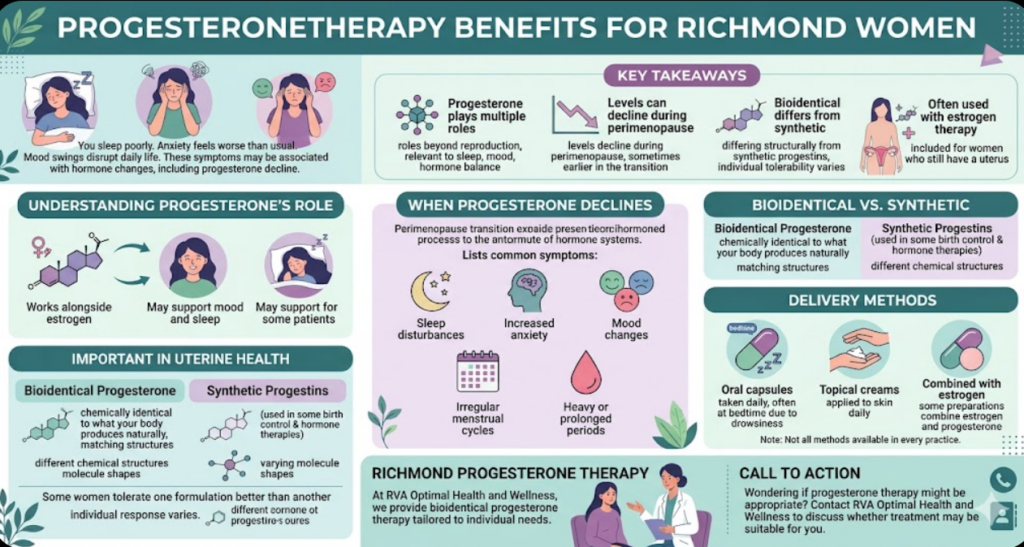
- Progesterone plays multiple roles: Progesterone plays roles beyond reproduction and may be relevant to sleep, mood, and the balance of hormone therapy
- Levels can decline during perimenopause: Progesterone levels can decline during perimenopause, sometimes earlier in the transition
- Bioidentical differs from synthetic: Bioidentical progesterone differs structurally from synthetic progestins, and tolerability may vary by individual
- Often used with estrogen therapy: Progesterone is often included with estrogen therapy for women who still have a uterus
You sleep poorly. Anxiety feels worse than usual. Mood swings disrupt daily life. These symptoms may be associated with hormone changes, including progesterone decline.
Progesterone therapy may be used alone or alongside estrogen treatment, depending on symptoms, history, and treatment goals.
At RVA Optimal Health and Wellness, we provide bioidentical progesterone therapy for Richmond women experiencing hormonal changes.
Understanding Progesterone’s Role
Progesterone functions in multiple ways:
- Works alongside estrogen in several hormone-related processes
- May play a role in mood and sleep for some women
- May support sleep in some patients, depending on the broader clinical picture
- Important in uterine health, particularly for women taking estrogen
When Progesterone Declines
Progesterone levels can decline during perimenopause, sometimes earlier in the transition.
Common symptoms that may be associated with low progesterone include:
- Sleep disturbances
- Increased anxiety or mood changes
- Irregular menstrual cycles
- Heavy or prolonged periods
Bioidentical vs. Synthetic
Bioidentical progesterone differs structurally from synthetic progestins, and tolerability may vary by individual. Bioidentical progesterone is chemically identical to what your body produces naturally, while synthetic progestins (used in some birth control and hormone therapies) have different chemical structures.
Some women may tolerate one formulation better than another, and individual response can vary.
Delivery Methods
Progesterone is available in several forms. Not all methods are available in every practice.
Oral capsules: Taken daily, often at bedtime since progesterone can cause drowsiness
Topical creams: Applied to skin daily
Combined with estrogen: Some preparations combine estrogen and progesterone
Richmond Progesterone Therapy
At RVA Optimal Health and Wellness, we provide bioidentical progesterone therapy tailored to individual needs.
Wondering if progesterone therapy might be appropriate? Contact RVA Optimal Health and Wellness to discuss whether treatment may be suitable for you.
Frequently Asked Questions
Can I take progesterone without estrogen?
Yes, some women take progesterone alone, particularly if experiencing symptoms primarily related to progesterone changes (like poor sleep or anxiety) rather than estrogen deficiency. Your provider will determine whether progesterone alone or combined therapy better suits your needs based on your symptoms, medical history, and hormone levels.
Are there side effects from progesterone therapy?
Some women experience drowsiness, dizziness, or headaches when starting progesterone. Taking oral progesterone at bedtime often helps minimize daytime drowsiness. Most side effects, if they occur, improve as your body adjusts to treatment. Contact your provider if side effects persist or feel concerning.
Disclaimer: This article provides general educational information about progesterone therapy. It should not be construed as medical advice specific to your individual situation. Progesterone therapy is not appropriate for all women. Your provider will review your medical history, symptoms, and test results to determine if treatment is suitable. Always consult with qualified healthcare providers regarding any medical concerns or treatment decisions.