Key Takeaways
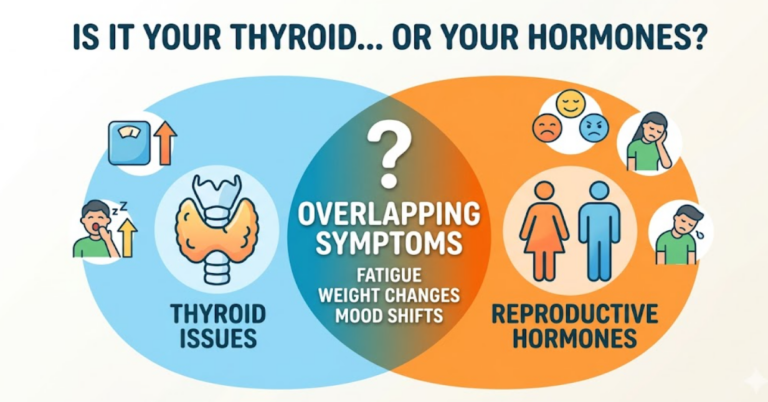
- Symptoms often overlap: Fatigue, weight changes, and mood shifts can occur with either condition
- Both conditions can coexist: Some patients have both thyroid and reproductive hormone imbalances
- Testing can help assess the source: Blood work can help providers assess whether symptoms may be related to thyroid issues, reproductive hormones, or another factor
- Treatment approaches may differ: Treatment approaches may differ depending on whether symptoms are related to thyroid function, reproductive hormones, or both
You feel exhausted despite adequate sleep. Weight creeps up despite diet efforts. Mood swings disrupt daily life.
These symptoms could indicate thyroid problems, reproductive hormone imbalance, or both. Understanding the difference can help guide more appropriate evaluation and next steps.
At RVA Optimal Health and Wellness, we evaluate both thyroid function and reproductive hormones to help identify factors that may be affecting your wellbeing.
Understanding the Thyroid System
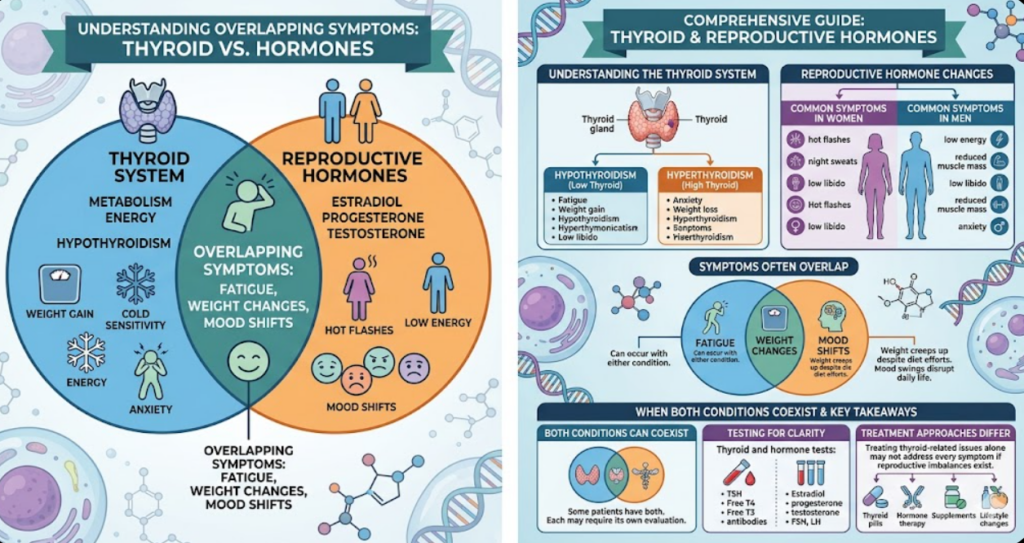
Your thyroid gland produces hormones that play a key role in metabolism, energy regulation, and temperature control.
Hypothyroidism (low thyroid): Fatigue, weight gain, cold sensitivity, dry skin, hair loss, constipation, brain fog
Hyperthyroidism (high thyroid): Anxiety, weight loss, heat sensitivity, rapid heartbeat, insomnia, tremors
Reproductive Hormone Changes
Reproductive hormone changes can create symptoms that overlap with thyroid issues.
Common symptoms in women: Hot flashes, night sweats, irregular periods, mood changes, low libido, vaginal dryness, sleep disruption, brain fog
Common symptoms in men: Low energy, reduced muscle mass, increased body fat, low libido, erectile dysfunction, mood changes, sleep problems
When Both Conditions Coexist
Some patients have both thyroid dysfunction and reproductive hormone imbalance. Each condition may require its own evaluation and treatment approach.
Treating thyroid-related issues alone may not fully address symptoms if reproductive hormone imbalance is also contributing. Similarly, hormone therapy may not address every symptom if thyroid-related issues are also present.
Comprehensive testing can provide a clearer picture, helping providers develop treatment approaches that address relevant hormone systems.
Testing for Clarity
Blood work can help providers assess whether symptoms may be related to thyroid issues, reproductive hormones, or another factor.
Thyroid testing: TSH, Free T4, Free T3, thyroid antibodies
Reproductive hormones: Estradiol, progesterone, testosterone, FSH, LH
Your provider may recommend testing multiple hormone systems when symptoms could indicate more than one type of imbalance.
Richmond Hormone and Thyroid Evaluation
At RVA Optimal Health and Wellness, we provide evaluation of both thyroid function and reproductive hormone levels.
Our Richmond providers help you understand which hormone systems may be contributing to your symptoms.
Wondering whether your symptoms indicate thyroid or hormone issues? Contact RVA Optimal Health and Wellness to schedule testing. Understanding possible contributors to your symptoms is an important first step.
Frequently Asked Questions
Can I have both thyroid and hormone problems at the same time?
Yes, some patients have both thyroid dysfunction and reproductive hormone imbalance. These are separate hormone systems that can both be affected simultaneously. Testing can help identify whether one or both systems may need attention. Treating only one condition may provide partial symptom relief if both are present.
Will treating my thyroid address everything?
Not always. If you have both thyroid dysfunction and reproductive hormone imbalance, thyroid treatment alone may not fully address all symptoms. Some patients improve with thyroid medication but continue experiencing issues related to reproductive hormone imbalance like hot flashes, night sweats, or low libido. Comprehensive evaluation can help ensure all relevant hormone issues are considered.
Disclaimer: This article provides general educational information about hormone and thyroid symptoms. It should not be construed as medical advice specific to your individual situation. Symptoms discussed can result from many conditions requiring professional evaluation. Your provider will review your medical history, symptoms, and test results to determine appropriate diagnosis and treatment. Always consult with qualified healthcare providers regarding any medical concerns.