Key Takeaways
- Hormones can significantly influence anxiety: Estrogen, progesterone, testosterone, thyroid, and cortisol all affect brain chemistry and emotional regulation
- Hormone therapy isn’t a standalone anxiety treatment: It works best as part of comprehensive care addressing multiple factors contributing to anxiety
- Timing may matter for hormonal transitions: Women experiencing new or worsening anxiety during perimenopause or menopause may benefit from evaluation
- Men can experience hormone-related anxiety too: Low testosterone may contribute to anxiety, irritability, and mood changes in men
- Proper evaluation is essential: a comprehensive assessment helps distinguish hormone-related anxiety from other conditions requiring different approaches
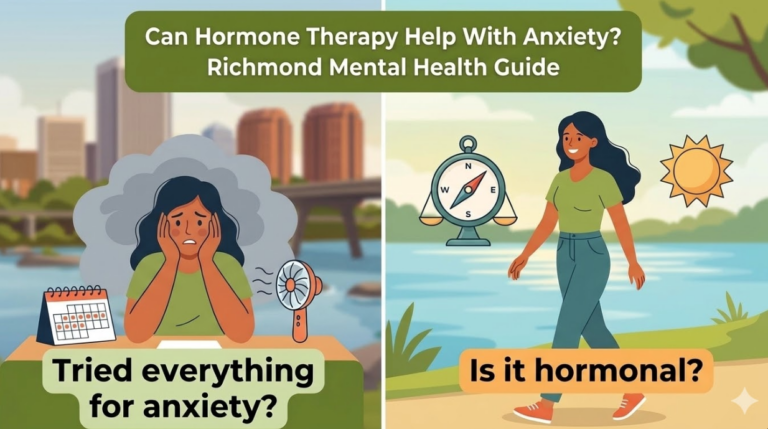
You’ve tried meditation, therapy, lifestyle changes, and perhaps medication—yet anxiety persists. Sleep suffers, concentration wavers, and the constant underlying tension feels inexplicable.
For some Richmond patients, hormones may be part of the picture. While anxiety has many causes, hormone imbalances can sometimes trigger or worsen anxiety symptoms in ways that conventional anxiety treatments alone may not fully address.
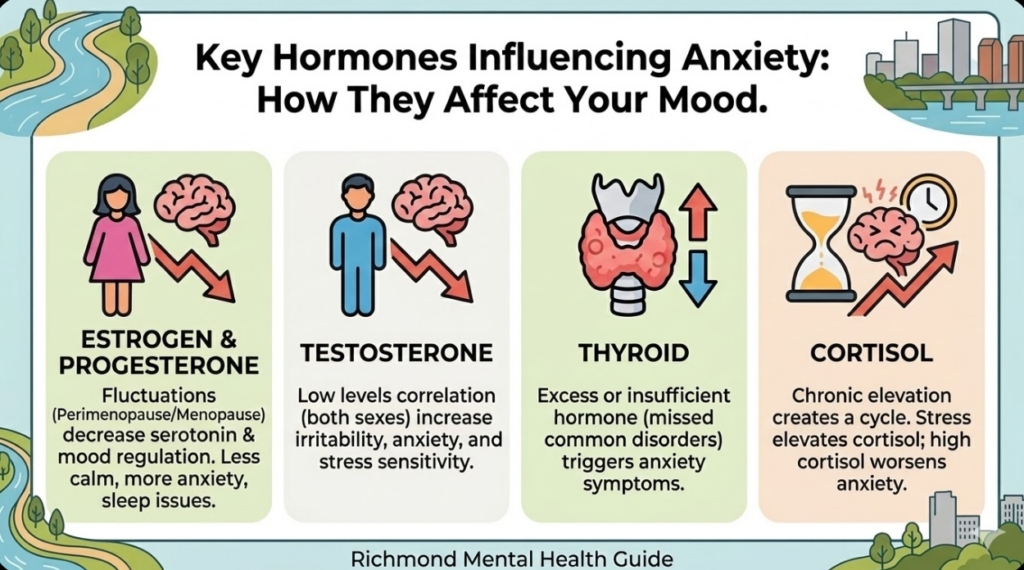
Key Hormones That Influence Anxiety
According to research on hormones and mental health, fluctuations or deficiencies in key hormones can significantly impact mood and anxiety levels.
Estrogen and progesterone: Estrogen influences serotonin and other mood-regulating neurotransmitters. When estrogen levels drop during perimenopause or menopause, many women experience increased anxiety. Progesterone has calming effects on the nervous system, and its decline can contribute to anxiety and sleep disturbances.
Testosterone: Low testosterone may correlate with increased anxiety and irritability in both men and women. Men experiencing age-related testosterone decline often report heightened stress sensitivity.
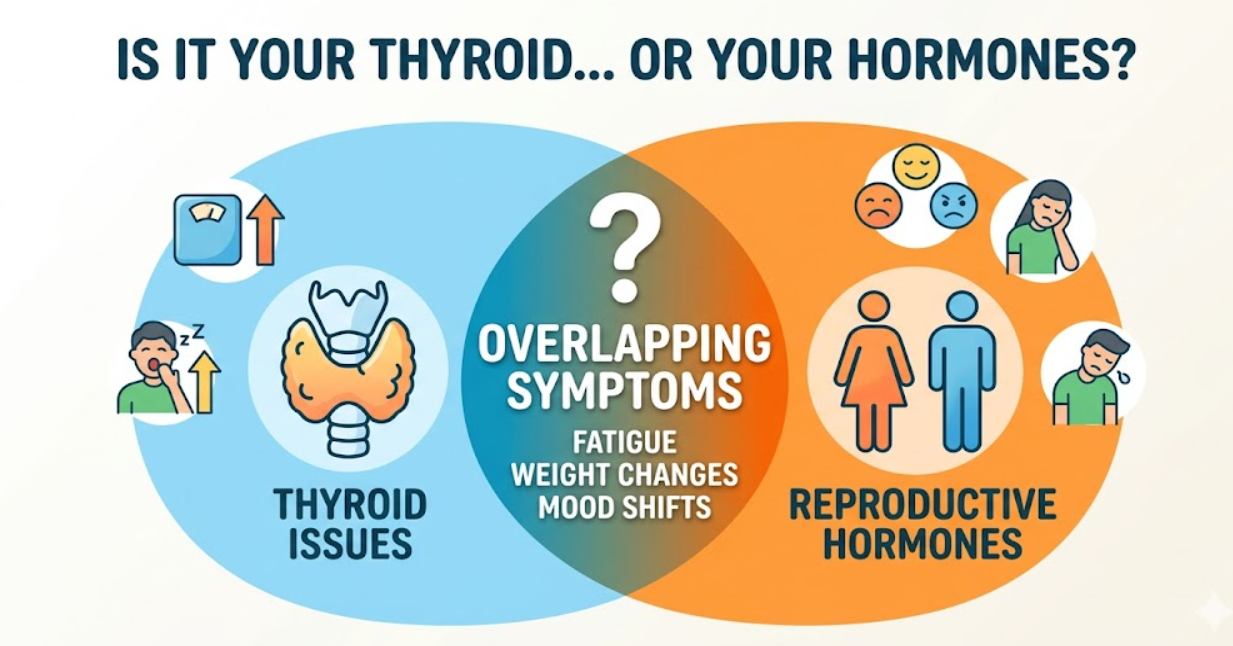
Thyroid hormones: Both excess and insufficient thyroid hormone can trigger anxiety symptoms. Thyroid disorders are remarkably common and can sometimes be missed, especially when symptoms are attributed solely to stress or anxiety.
Cortisol: Your primary stress hormone becomes problematic when chronically elevated or dysregulated, creating a cycle where stress elevates cortisol, elevated cortisol worsens anxiety, and anxiety generates more stress.
When Hormone Therapy May Help
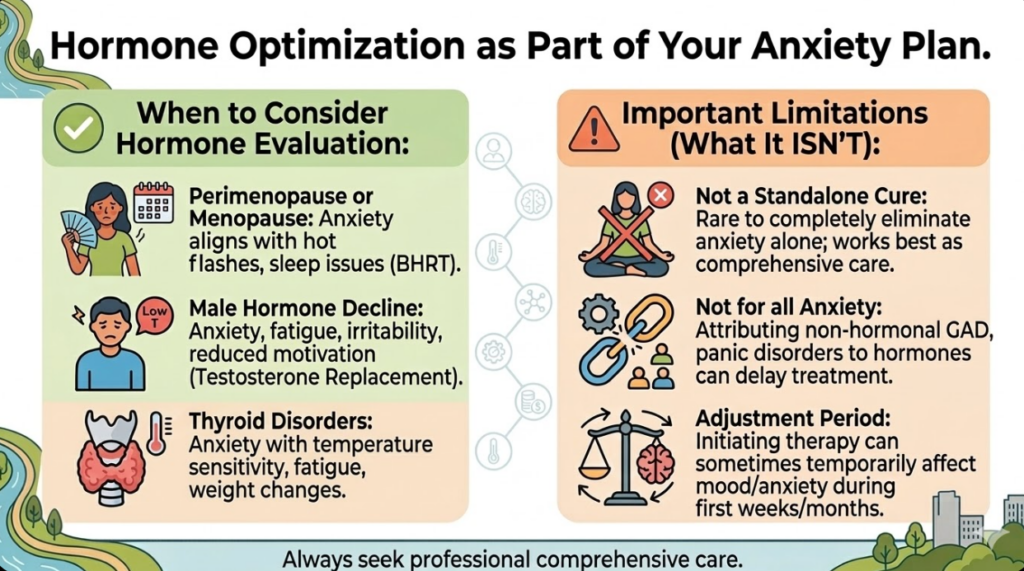
Hormone therapy isn’t appropriate for all anxiety, but specific situations suggest hormone optimization might provide relief.
Perimenopause and menopause: If your anxiety coincides with irregular periods, hot flashes, night sweats, sleep disturbances, or other menopausal symptoms, hormone involvement may be playing a role. For some women, bioidentical hormone replacement therapy (BHRT) that addresses estrogen and progesterone deficiencies may help reduce anxiety symptoms, particularly when combined with other anxiety management strategies.
Male hormone decline: Men experiencing age-related testosterone decline may develop anxiety alongside fatigue, reduced motivation, and irritability. Testosterone replacement therapy, when appropriately indicated and carefully monitored, may improve anxiety for some patients along with other quality of life symptoms.
Thyroid-related anxiety: If you’re experiencing anxiety along with weight changes, temperature sensitivity, fatigue, hair loss, or changes in heart rate, thyroid evaluation is very important to consider. Thyroid disorders frequently manifest as anxiety symptoms.
Important Limitations
Not a standalone treatment: Even when hormones contribute to anxiety, hormone therapy works best as part of comprehensive care. Effective anxiety management often combines hormone optimization with therapy, stress management, lifestyle modifications, and sometimes medication.
Proper diagnosis essential: Not all anxiety stems from hormone imbalances. Generalized anxiety disorder, panic disorder, and other mental health conditions require specific evidence-based treatments. Attributing non-hormonal anxiety solely to hormones can delay appropriate treatment and prolong symptoms.
Adjustment period: Initiating hormone therapy can sometimes temporarily affect mood and anxiety as your body adjusts to changing hormone levels, especially in the first few weeks to months. Proper dosing and monitoring optimize outcomes.
Comprehensive Approach
Whether or not hormones contribute to your anxiety, comprehensive management typically includes therapy (particularly cognitive behavioral therapy), lifestyle modifications including exercise and stress management, and when appropriate, medication. Richmond’s outdoor spaces like the James River trails offer excellent opportunities for anxiety-reducing physical activity.
The most effective approach recognizes that anxiety typically has multiple contributing factors requiring individualized treatment. For some Richmond patients, hormone optimization represents one important piece of anxiety management that, combined with other appropriate interventions, can lead to meaningful improvement in quality of life for many patients.
At RVA Optimal Health and Wellness, we provide comprehensive hormone evaluation for Richmond patients experiencing mood and anxiety symptoms. Our approach integrates hormone health with overall wellness, recognizing that optimal mental health may require addressing multiple physiological and psychological factors.
Ready to explore whether hormones may be contributing to your anxiety? Contact RVA Optimal Health and Wellness to schedule a comprehensive evaluation.
Frequently Asked Questions
How do I know if my anxiety is hormone-related?
Several clues may suggest hormonal involvement: anxiety that emerges or worsens during perimenopause, menopause, postpartum, or during age-related hormonal changes; patterns that correlate with menstrual cycles; or anxiety that coincides with other hormone-related symptoms like hot flashes, sleep disturbances, or energy changes. However, comprehensive evaluation including symptom assessment and laboratory testing provides the clearest answer about whether hormones may be contributing to your anxiety.
Will hormone therapy cure my anxiety?
Hormone therapy rarely cures anxiety completely, but when hormonal imbalances are part of the picture, optimizing hormone levels can sometimes meaningfully reduce anxiety symptoms. Most people benefit from combining hormone optimization with other evidence-based anxiety treatments including therapy, lifestyle modifications, and sometimes medication. The relationship between hormones and anxiety can be real, complex, and significant for many people, but addressing it effectively usually requires a comprehensive approach.
Disclaimer: This article is for educational purposes only and should not be construed as medical or mental health advice. Anxiety has many potential causes requiring proper professional evaluation and diagnosis. Hormone therapy is not appropriate for all anxiety and should only be pursued under qualified medical supervision. If you’re experiencing severe anxiety, panic attacks, or suicidal thoughts, seek immediate professional help.